




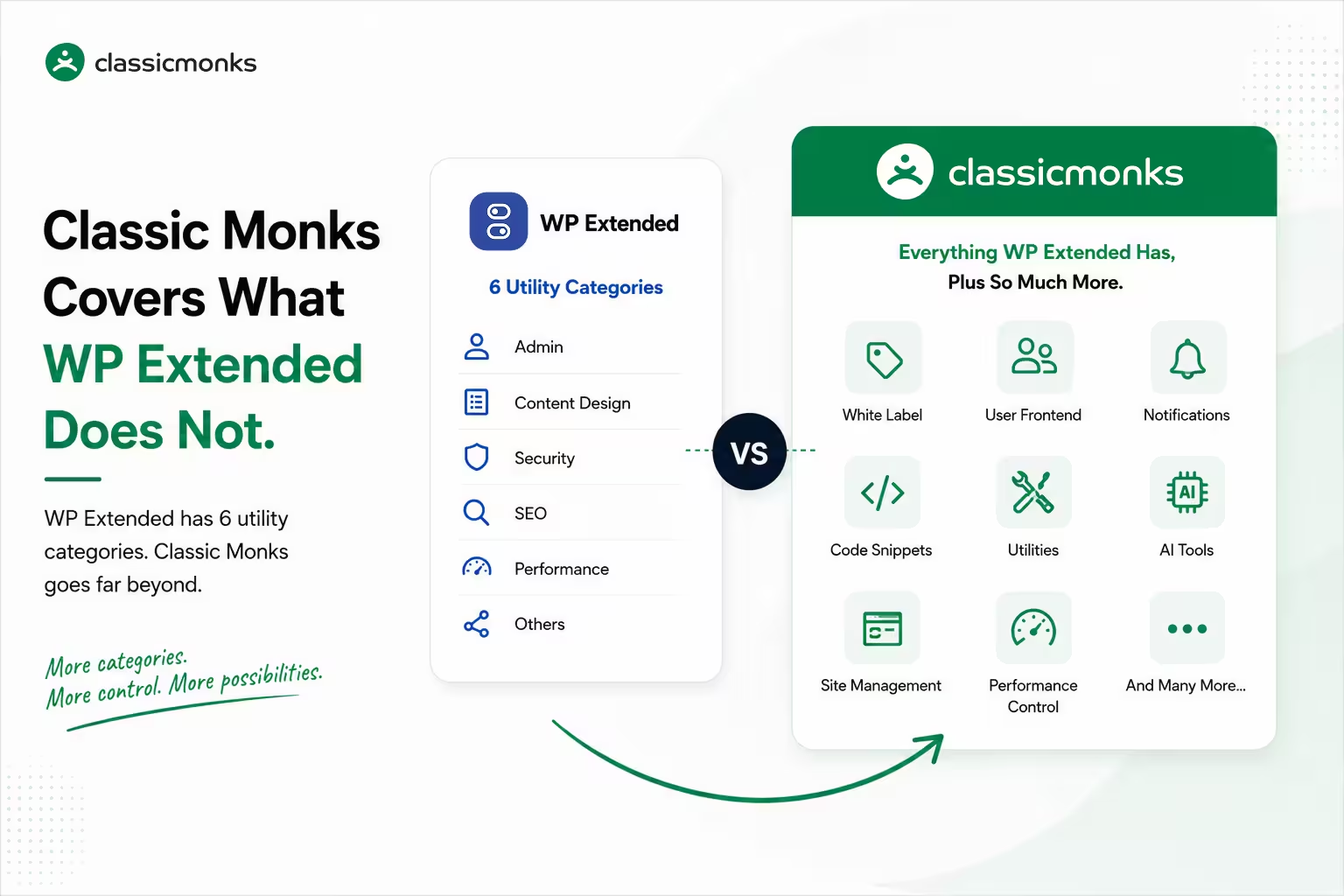
This WP Extended alternative comparison examines what Classic Monks adds beyond WP Extended’s current 51-module toolkit, including AI, Bricks Builder, WooCommerce, performance operations, staging protection, media management, setup automation, and agency delivery.
We compared WP Extended’s official modules page and pricing page with the live Classic Monks feature library, the current Classic Monks changelog, and the local feature references used to verify implementation scope. The comparison reflects the August 20, 2026 feature set.
How we selected the differences: We included a category when WP Extended’s current module list does not represent a comparable workflow and Classic Monks has a documented, implemented capability. We kept material limitations visible where WP Extended still owns a workflow or where the products take different approaches.
The better question is: What can Classic Monks add to a WordPress site that is outside WP Extended’s current module set?
Classic Monks is not just another admin-enhancement plugin. It combines WordPress controls with AI, Bricks Builder tools, WooCommerce features, performance controls, media workflows, staging protection, setup tools, and agency white-label options. The official Classic Monks features library currently lists 393+ features, including 162 Bricks Builder tools.
WP Extended remains a solid, focused utility toolkit. It also has modules Classic Monks does not currently replace, including Quick Search, Quick Post, the Rollback Manager, Export Posts, Pixel Tag Manager, Maintenance Mode, and Disk Usage. This post focuses on the other side of the decision: the capabilities you gain when Classic Monks becomes your core WordPress stack.
Quick verdict: Choose Classic Monks when you want a broader WordPress stack that covers your builder, store, performance, media, security, setup, and agency workflows in one modular plugin. Keep WP Extended, or run both during migration, when you depend on a workflow Classic Monks does not currently match, such as Quick Search, Quick Post, plugin rollback, export tools, a pixel tag manager, or maintenance mode.
Context: This deep-dive is one spoke of the Best All-in-One WordPress Plugins in 2026 hub, which compares Classic Monks and WP Extended alongside ASE, Jetpack, WPMU DEV, and Perfmatters.
Low-risk next step: Explore the full stack in the zero-install Classic Monks demo, then compare the current pricing once you know which categories matter to your sites.
What does Classic Monks have that WP Extended does not?
The clearest difference is category coverage. WP Extended concentrates on WordPress administration, content utilities, developer tools, basic media handling, performance controls, and security switches. Classic Monks includes many of those areas, then extends into product building, site operations, and agency delivery.
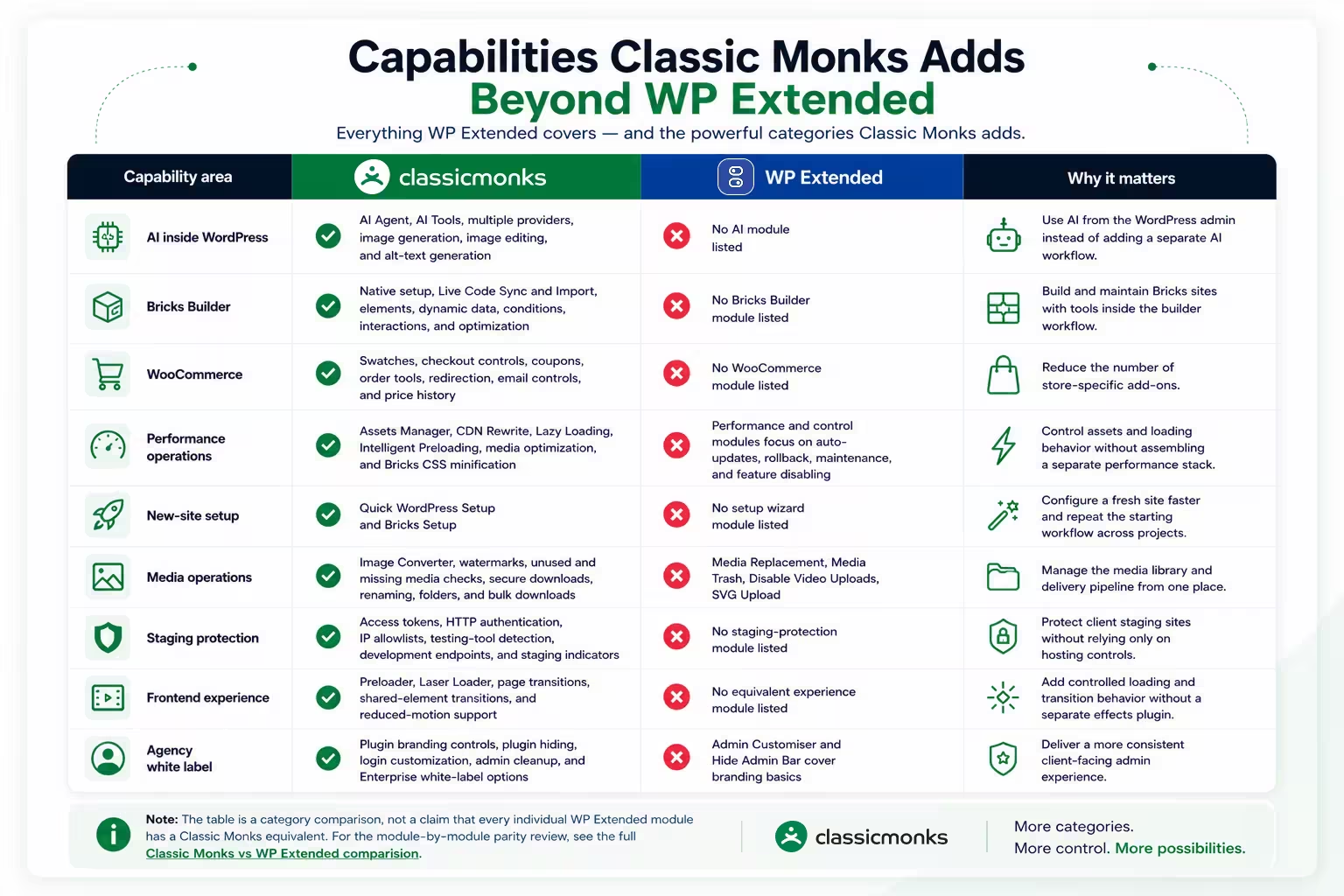
| Capability area | Classic Monks | WP Extended | Why it matters |
|---|---|---|---|
| AI inside WordPress | AI Agent, AI Tools, multiple providers, image generation, image editing, and alt-text generation | No AI module listed | Use AI from the WordPress admin instead of adding a separate AI workflow |
| Bricks Builder | Native setup, Live Code Sync and Import, elements, dynamic data, conditions, interactions, and optimization | No Bricks Builder module listed | Build and maintain Bricks sites with tools inside the builder workflow |
| WooCommerce | Swatches, checkout controls, coupons, order tools, redirection, email controls, and price history | No WooCommerce module listed | Reduce the number of store-specific add-ons |
| Performance operations | Assets Manager, CDN Rewrite, Lazy Loading, Intelligent Preloading, media optimization, and Bricks CSS minification | Performance and control modules focus on auto-updates, rollback, maintenance, and feature disabling | Control assets and loading behavior without assembling a separate performance stack |
| New-site setup | Quick WordPress Setup and Bricks Setup | No setup wizard module listed | Configure a fresh site faster and repeat the starting workflow across projects |
| Media operations | Image Converter, watermarks, unused and missing media checks, secure downloads, renaming, folders, and bulk downloads | Media Replacement, Media Trash, Disable Video Uploads, SVG Upload | Manage the media library and delivery pipeline from one place |
| Staging protection | Access tokens, HTTP authentication, IP allowlists, testing-tool detection, development endpoints, and staging indicators | No staging-protection module listed | Protect client staging sites without relying only on hosting controls |
| Frontend experience | Preloader, Laser Loader, page transitions, shared-element transitions, and reduced-motion support | No equivalent experience module listed | Add controlled loading and transition behavior without a separate effects plugin |
| Agency white label | Plugin branding controls, plugin hiding, login customization, admin cleanup, and Enterprise white-label options | Admin Customiser and Hide Admin Bar cover branding basics | Deliver a more consistent client-facing admin experience |
The table is a category comparison, not a claim that every individual WP Extended module has a Classic Monks equivalent. For the module-by-module parity review, see the full Classic Monks vs WP Extended comparison.
Does Classic Monks offer AI features that WP Extended does not?
Yes. Classic Monks includes an AI layer that is not represented in WP Extended’s current module list.
Classic Monks can connect to providers such as OpenRouter, OpenAI, Anthropic, Google Gemini, NVIDIA, Zhipu AI, OpenAI-compatible services, and custom endpoints. The plugin also separates text and vision or image providers for workflows such as image-aware alt-text generation.
The practical tools include:
- An AI Agent chat overlay inside the WordPress admin
- AI-powered content and WordPress management workflows
- Alt-text generation for Media Library images
- Image generation from prompts
- Image editing, including background and object workflows
- Bricks AI Builder for converting HTML designs into Bricks structures
WP Extended can help clean up and configure a WordPress site. Classic Monks adds an AI-assisted production layer for the work that happens after the site is configured.
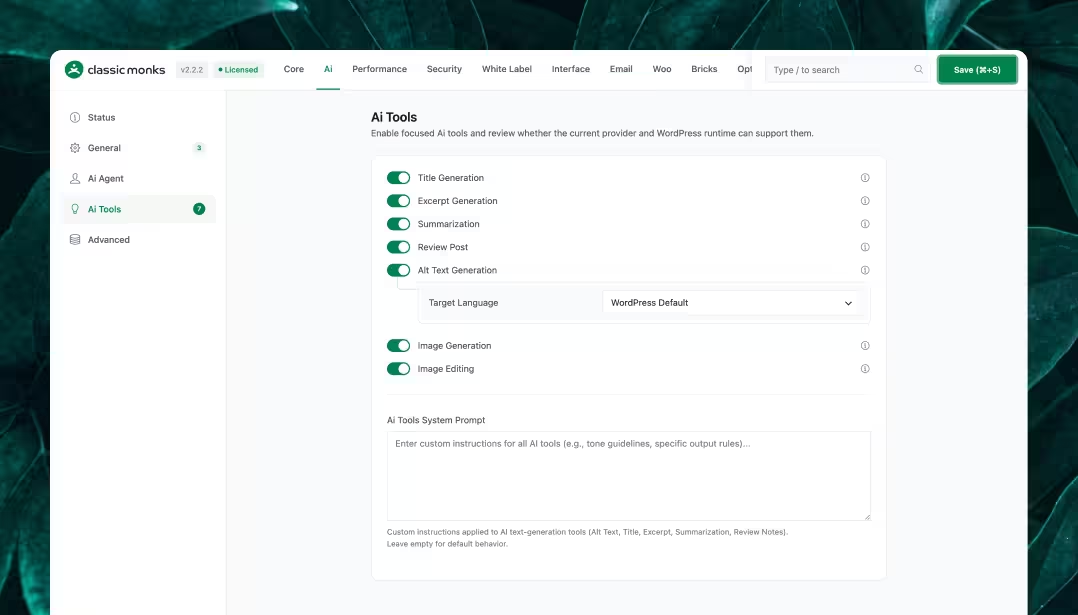
Read the Classic Monks AI feature guide.
Is Classic Monks better for Bricks Builder sites?
If Bricks is part of your workflow, Classic Monks has a much deeper native integration. WP Extended’s current module list does not include a Bricks Builder category.
Classic Monks includes Bricks setup tools, Live Code Sync and Import, BEM class generation, a CSS variable picker, SVG and image conversion, builder interface controls, custom elements, query elements, dynamic data tags, conditions, interactions, animations, import and export, asset controls, and CSS minification.
That changes the buying decision for a Bricks agency. You are not choosing between two admin utilities. You are choosing whether your core plugin should also improve the builder your team uses every day.
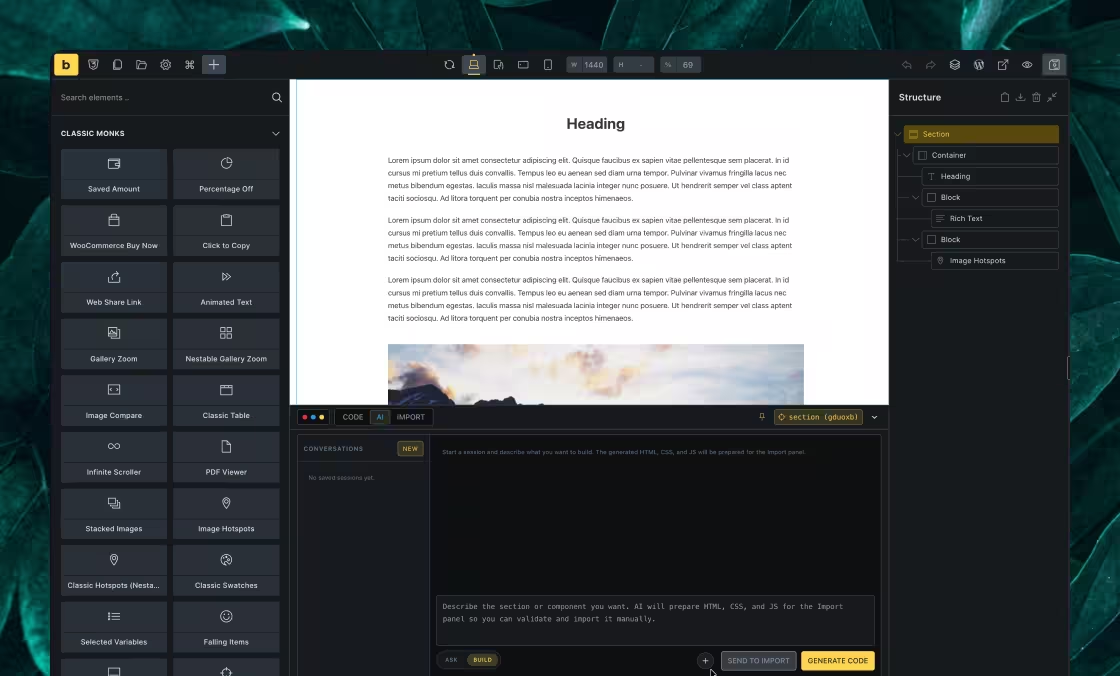
The Bricks tools include practical production features such as:
- Live HTML, CSS, and JavaScript sync inside the Bricks workflow
- Dynamic data tags for WordPress, media, taxonomy, and WooCommerce data
- Conditions based on content, users, media, taxonomies, and store data
- Scroll, click, focus, swipe, idle, print, and other interaction triggers
- Bricks-specific lazy loading and preloading controls
- CSS minification and selective Bricks asset loading
- Native elements for tables, galleries, image comparisons, hotspots, timelines, sliders, and more
See the Bricks Builder documentation for the current builder feature set.
What does Classic Monks add for WooCommerce?
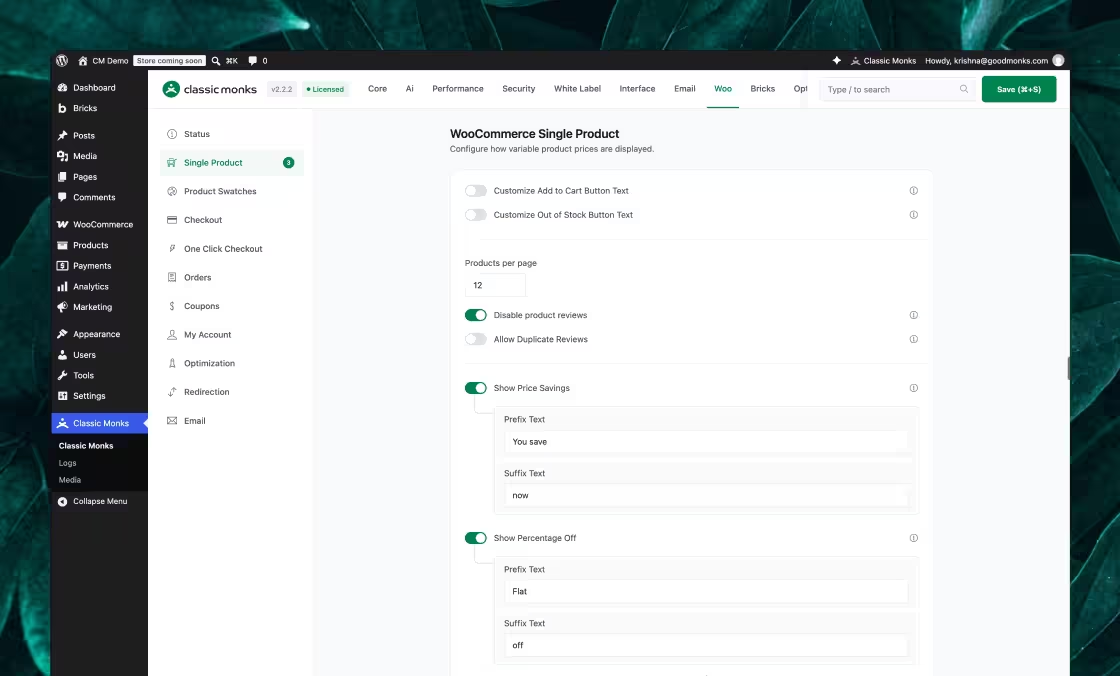
WP Extended’s current module list does not include a WooCommerce feature category. Classic Monks includes a dedicated WooCommerce tab with tools for products, checkout, coupons, orders, My Account, redirection, optimization, and email behavior.
Examples include:
- Product swatches for colors, images, and labels
- Automatic selection and handling of product variations
- Checkout field cleanup, placeholders, inline validation, and custom order headings
- Direct checkout links and a product selector for last-minute additions
- URL coupons, automatic coupon application, BOGO deals, and role-based restrictions
- Custom order statuses and order-table columns
- WooCommerce script and style controls on non-store pages
- Cart-fragmentation controls and WooCommerce admin cleanup
- Redirects for cart, login, logout, and My Account workflows
- Product price history tracking with display and shortcode options
For an agency building WooCommerce sites, this is a major difference. Classic Monks can cover store-specific work that would otherwise require a separate collection of extensions. WP Extended can still handle its own WordPress enhancement jobs, but it is not a WooCommerce toolkit.
Does Classic Monks include performance tools missing from WP Extended?
Classic Monks has a broader performance and asset-management layer than the current WP Extended module list shows. This is not a claim that Classic Monks replaces every caching product. It does not provide full-page caching, and you should keep a proper caching or hosting layer where the site needs one.
WP Extended’s Performance and Control category focuses on disabling features (auto-updates, blog features, comments, RSS feeds), SEO visibility notices, external links, maintenance mode, and plugin rollback. Classic Monks takes a different approach, targeting asset loading, media optimization, and page-speed behavior:
- Assets Manager for conditionally disabling scripts and styles
- CDN Rewrite for selected site directories
- Lazy loading for images, iframes, background images, videos, and YouTube embeds
- Critical-image preloading and above-the-fold exclusions
- Lazy rendering and negative loading for off-screen content
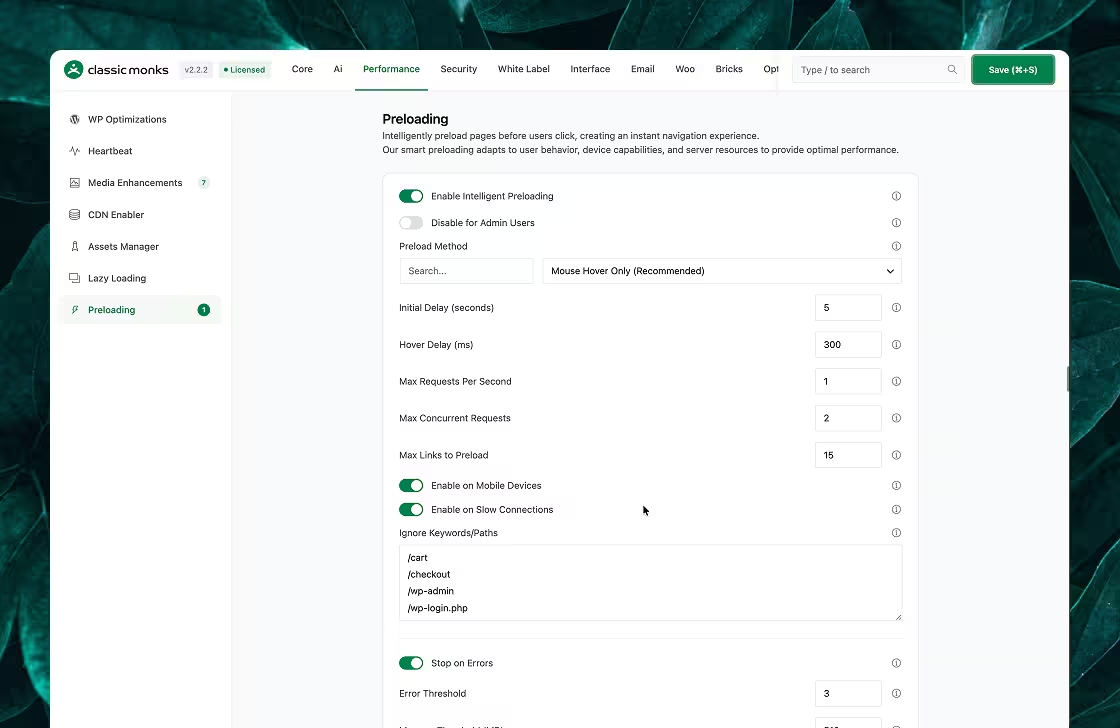
- Intelligent page preloading based on navigation behavior
- Selective media preloading and custom URL preloading
- Image conversion to WebP and AVIF
- Bricks asset disabling and CSS minification
- Controls for emojis, Dashicons, Google Fonts, embeds, jQuery Migrate, RSS, and other WordPress output
This makes Classic Monks a better fit when you want site-level performance controls alongside admin and content features. For full-page caching, use a dedicated caching solution instead of pretending one plugin should do everything.
How does Classic Monks improve a new WordPress setup?
Classic Monks includes Quick WordPress Setup, a guided setup feature for fresh WordPress installations. It handles common starting tasks such as site identity, plugin and theme selection, homepage settings, cleanup, and environment configuration.
It also includes a separate Bricks setup workflow for importing Bricks theme styles, global settings, and templates.
That matters when an agency repeats the same baseline work across client sites. Instead of installing several utility plugins, opening several settings screens, and rebuilding the same starting checklist, the team can begin with one setup workflow and then enable only the features needed for that project.
Quick WordPress Setup is a feature for provisioning a real WordPress site. Read the Quick WordPress Setup guide for the workflow and prerequisites. It is not the Classic Monks demo sandbox. If you want to try the plugin without changing an existing site, use the Classic Monks demo.
What media features does Classic Monks add beyond WP Extended?
WP Extended includes useful media modules (Media Replacement, Media Trash, Disable Video Uploads, and SVG File Upload), so this is not a zero-to-one comparison. The difference is the breadth of the workflow.
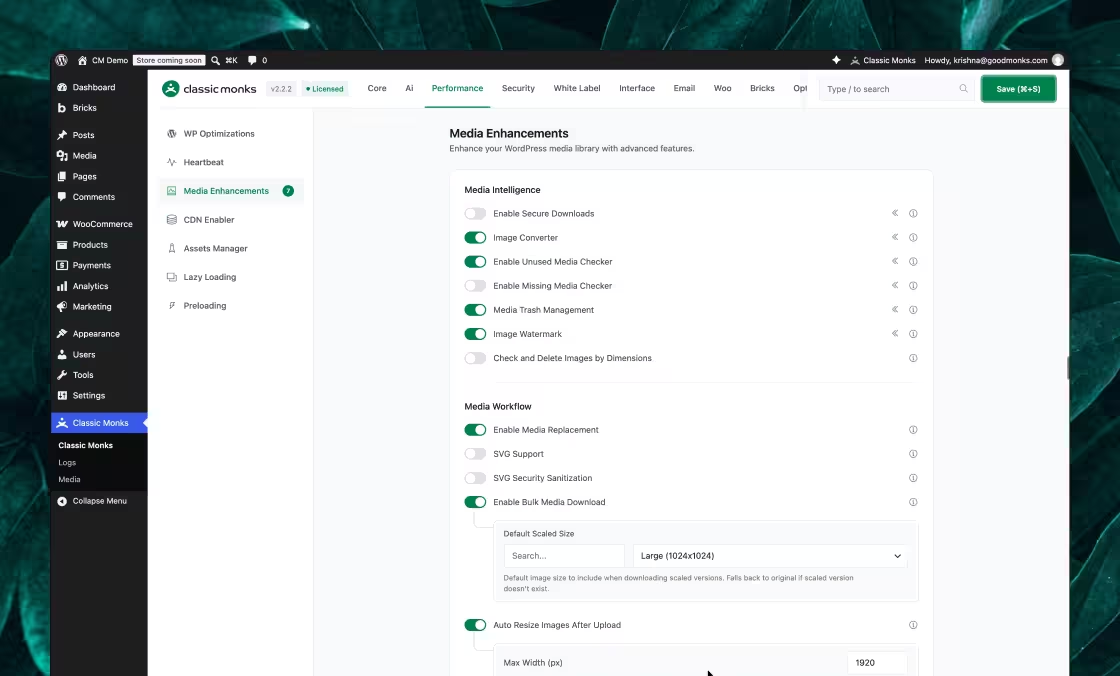
Classic Monks adds image conversion, watermarks, unused and missing media checks, secure downloads, bulk ZIP downloads, filename cleanup, renaming, duplication, media trash management, dimension-based cleanup, image resizing, SVG sanitization, and folders that can organize more than media items.
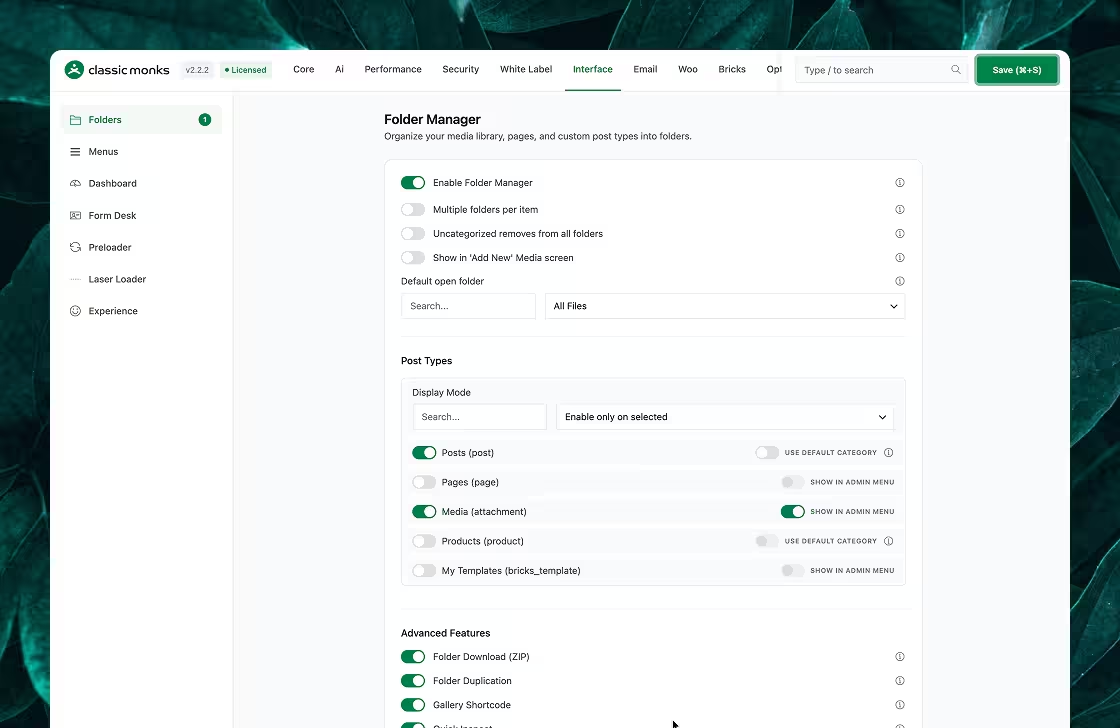
The Folder Manager supports drag-and-drop organization, folder colors, multiple folders per item, ZIP downloads, folder duplication, filtering, and selected post-type organization. Classic Monks also has media replacement that preserves the attachment ID and existing URLs.
Choose Classic Monks when your media problem is larger than replacing or deleting a few files. It is designed to cover the movement from upload to organization, optimization, replacement, and delivery.
Does Classic Monks offer staging protection that WP Extended does not?
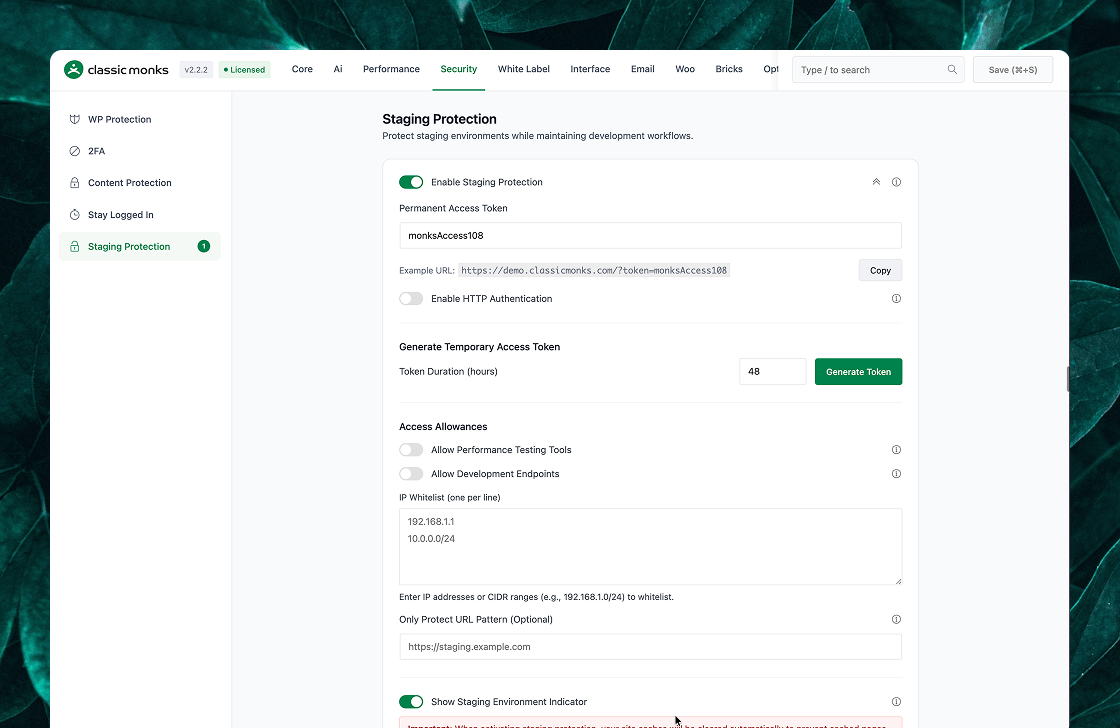
Classic Monks includes a dedicated Staging Protection section. It can use access tokens, temporary access tokens, HTTP Basic Authentication, IP or CIDR allowlists, URL-pattern restrictions, and visible staging indicators. It can also allow legitimate performance-testing tools, development endpoints, webhooks, API clients, and CI/CD systems when the staging lock is active.
This is useful for agencies that share staging links with clients, QA teams, or external tools. It gives the site a defined access layer instead of relying on a forgotten password or an undocumented hosting rule.
WP Extended’s current module list does not show a comparable staging-protection category.
What does Classic Monks add for frontend experience?
Classic Monks includes frontend experience features that are outside WP Extended’s current module categories:
- Preloader animations with media, text, and mobile controls
- Laser Loader progress bars with configurable position and color
- Page transitions using the CSS View Transitions API with a JavaScript fallback
- Shared-element transitions for headers, content, post titles, and thumbnails
- Reduced-motion support
- Admin transitions
These features are not a substitute for good UX or performance work. They are useful when a project needs a controlled transition or loading layer without adding another narrowly focused plugin.
What agency and white-label features does Classic Monks add?
WP Extended has selected admin branding features through Admin Customiser and Hide Admin Bar. Classic Monks goes further when the goal is to deliver a controlled client-facing WordPress environment.
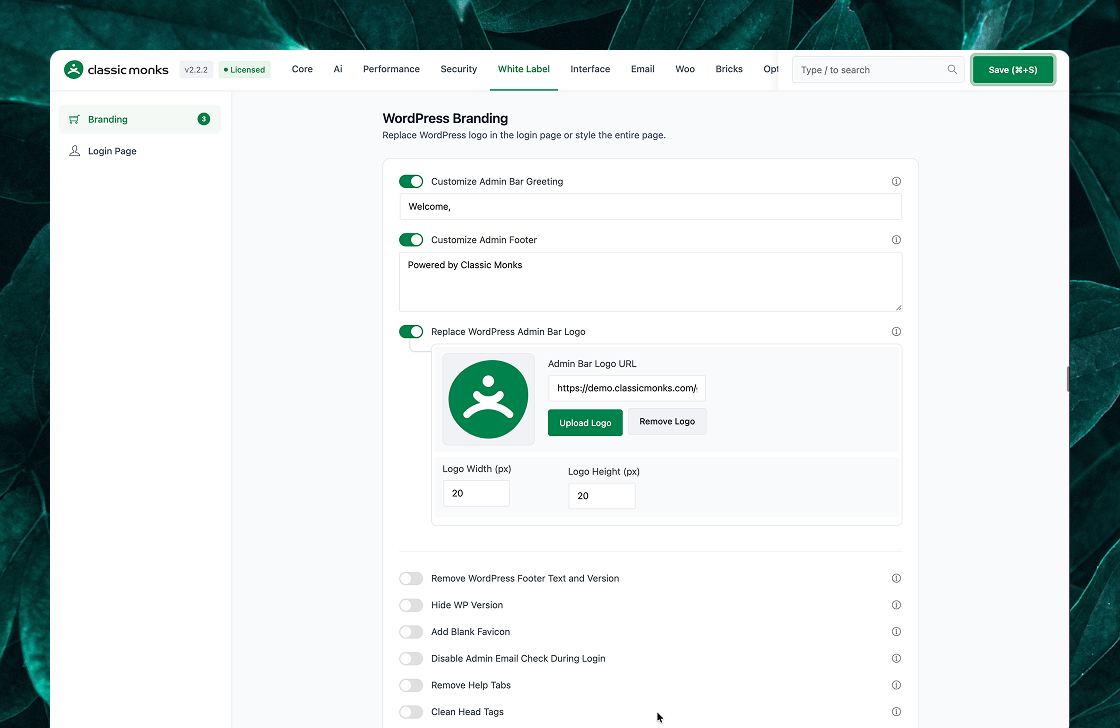
Classic Monks includes admin-bar greeting changes, admin footer customization, WordPress logo replacement, dashboard cleanup, help-tab removal, frontend head cleanup, login backgrounds, custom login logos, login form styling, navigation-link styling, notice styling, language-dropdown removal, plugin hiding, version hiding, and controls for hiding support or community links.
The full white-label plugin capability is listed under the Enterprise plan. It should not be treated as included in every plan.
For agencies, the value is not cosmetic. A cleaner admin reduces the number of third-party settings clients see, makes handover easier, and gives the team more control over what remains visible after launch.
What does Classic Monks add for email and notifications?
WP Extended includes SMTP Email as a Developer Tools module for sending WordPress email through an external SMTP service. Classic Monks adds a broader email and notification layer.
Classic Monks includes SMTP configuration with multiple provider support, WooCommerce email customization (order headings, status labels, template overrides), admin notification controls, and email-related debugging tools. The WooCommerce email controls mean you can adjust store-related emails from the same plugin that handles WooCommerce checkout, coupons, and order management.
For an agency running WooCommerce stores, this is a convenience gain. You handle store email behavior in the same settings area as the rest of the store configuration instead of splitting email work across two or three different plugins.
Is Classic Monks a complete replacement for WP Extended?
No, not for every site.
Classic Monks is the stronger choice when you want WordPress admin controls plus AI, Bricks, WooCommerce, performance, setup, media, staging, email, security, and white-label workflows. WP Extended remains the better fit for specific modules that Classic Monks does not currently match:
- Quick Search for fast in-admin content searching
- Quick Post for rapid content creation from the admin bar
- Rollback Manager for rolling back plugin or WordPress updates
- Export Posts and Export Users for bulk content and user data extraction
- Pixel Tag Manager for injecting tracking pixels without code
- Maintenance Mode for taking a site offline with a maintenance page
- Disk Usage for monitoring storage consumption
- External Permalinks for linking to external URLs as post permalinks
That distinction makes the migration decision easier. Do not replace a required workflow because a feature-count headline looks attractive. Inventory your enabled WP Extended modules first, test Classic Monks on staging, and keep WP Extended only for the gaps that still matter.
The full comparison documents the current module-by-module analysis for all 51 WP Extended modules.
Pricing comparison
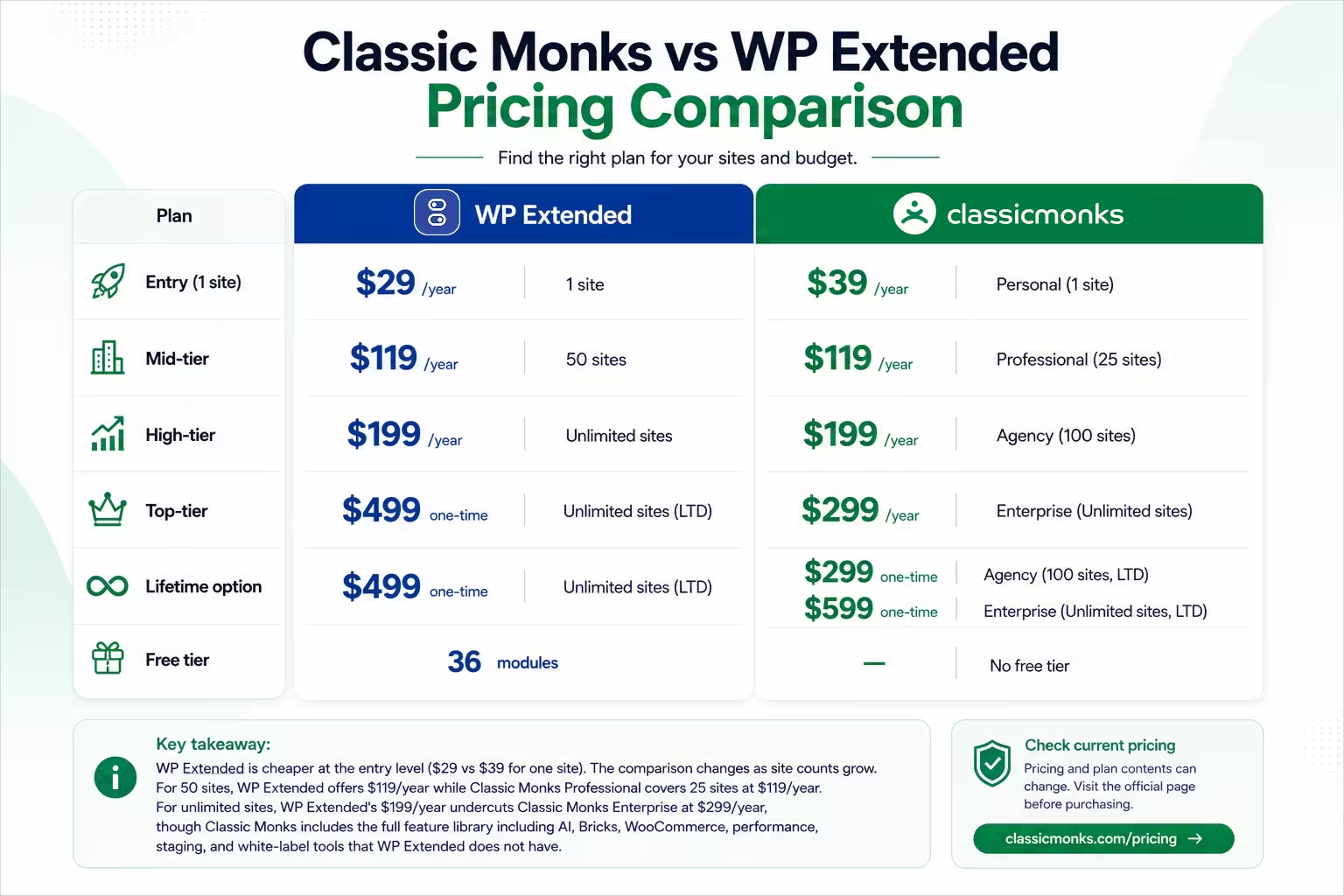
| Plan | WP Extended | Classic Monks |
|---|---|---|
| Entry (1 site) | $29/year | $39/year (Personal) |
| Mid-tier | $119/year (50 sites) | $119/year (25 sites, Professional) |
| High-tier | $199/year (unlimited) | $199/year (100 sites, Agency) |
| Top-tier | $499 one-time (unlimited, LTD) | $299/year (unlimited, Enterprise) |
| Lifetime option | $499 one-time (unlimited) | $299 LTD (100 sites, Agency) or $599 LTD (unlimited, Enterprise) |
| Free tier | 36 modules | No free tier |
WP Extended is cheaper at the entry level ($29 vs $39 for one site). The comparison changes as site counts grow. For 50 sites, WP Extended offers $119/year while Classic Monks Professional covers 25 sites at $119/year. For unlimited sites, WP Extended’s $199/year undercuts Classic Monks Enterprise at $299/year, though Classic Monks includes the full feature library including AI, Bricks, WooCommerce, performance, staging, and white-label tools that WP Extended does not have.
Check the current Classic Monks pricing before buying because pricing and plan contents can change.
Coexistence guidance
Running Classic Monks and WP Extended together is a valid migration path. The rule is simple: assign one plugin as the owner of each shared concern.
- SMTP: Keep one SMTP configuration. Disable the other.
- Login lockdown and security: Choose one Limit Login Attempts, one Custom Login URL, and one XML-RPC control.
- Code snippets: Classic Monks Code Manager or WP Extended Code Snippets. Pick one.
- Media replacement: One plugin handles media replacement. Not both.
- Admin menus: One plugin controls admin menu visibility. Not both.
- Maintenance mode: Choose one maintenance mode implementation.
Overlapping modules can produce confusing output, duplicate settings screens, or unexpected behavior. Disable the WP Extended module when Classic Monks owns the concern, and test each change on staging before touching production.
Migration checklist (staging-first)
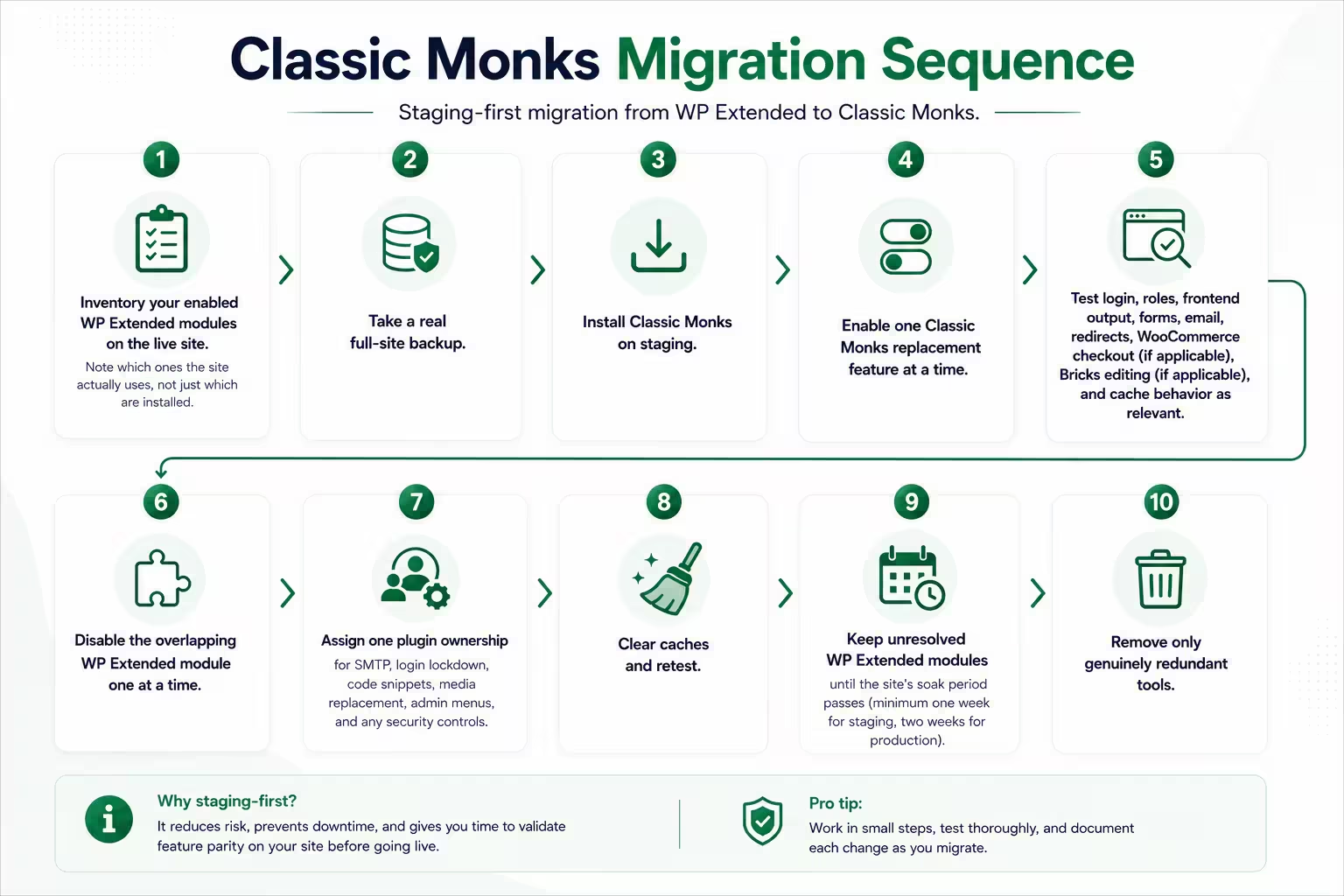
- Inventory your enabled WP Extended modules on the live site. Note which ones the site actually uses, not just which are installed.
- Take a real full-site backup.
- Install Classic Monks on staging.
- Enable one Classic Monks replacement feature at a time.
- Test login, roles, frontend output, forms, email, redirects, WooCommerce checkout (if applicable), Bricks editing (if applicable), and cache behavior as relevant.
- Disable the overlapping WP Extended module one at a time.
- Assign one plugin ownership for SMTP, login lockdown, code snippets, media replacement, admin menus, and any security controls.
- Clear caches and retest.
- Keep unresolved WP Extended modules until the site’s soak period passes (minimum one week for staging, two weeks for production).
- Remove only genuinely redundant tools.
Final verdict
WP Extended is a focused WordPress utility toolkit with a generous free tier and solid admin, content, and developer modules. Classic Monks covers much of that territory, but its larger advantage is what sits outside the WP Extended model: AI workflows, Bricks Builder tools, WooCommerce controls, performance operations, setup automation, media management, staging protection, frontend experience, and agency white label.
If those are the tools you need, Classic Monks is not just a WP Extended alternative. It is a broader core stack that can replace several categories of plugins around WP Extended’s original job.
Start with your enabled modules, test on staging, and move the site to Classic Monks when the real workflows pass.

Add your first comment to this post