




What Is the Staging Protection feature?
Staging and development sites are private copies of your site used for testing. They have the same content, same URLs, and same functionality as the production site. This creates a risk: if a staging site is accidentally indexed by search engines, it can compete with (or replace) the production site in search results.
The Staging Protection feature in Classic Monks combines several techniques to prevent this:
- HTTP Authentication: Browser-level password prompt before any content loads
- Search engine blocking: robots.txt and meta tags to prevent indexing
- Staging indicator: A visible banner in the admin to remind everyone this is a staging site
- Development endpoint blocking: Block access to common dev endpoints (e.g.,
/wp-admin/admin-ajax.php?action=debug)
Why You Need It
Staging site accidents are common and serious:
- Search engine indexing: A staging site indexed by Google can permanently damage your SEO
- User confusion: Customers may end up on the staging site and not realize it
- Data leakage: Staging sites often have test data that shouldn’t be public
- Cross-contamination: Form submissions on staging may go to production
- Email leakage: Staging sites can send emails to real customers
For any non-production site, Staging Protection is essential.
How to Enable Staging Protection in WordPress
Step 1: Navigate to Settings
Click into the Classic Monks plugin settings in your WordPress dashboard.
Step 2: Go to the Security Tab
Click on the Security menu, then click the Staging Protection subtab.
Step 3: Enable Staging Protection
Scroll to Enable Staging Protection and toggle on. The feature activates all the related protections.
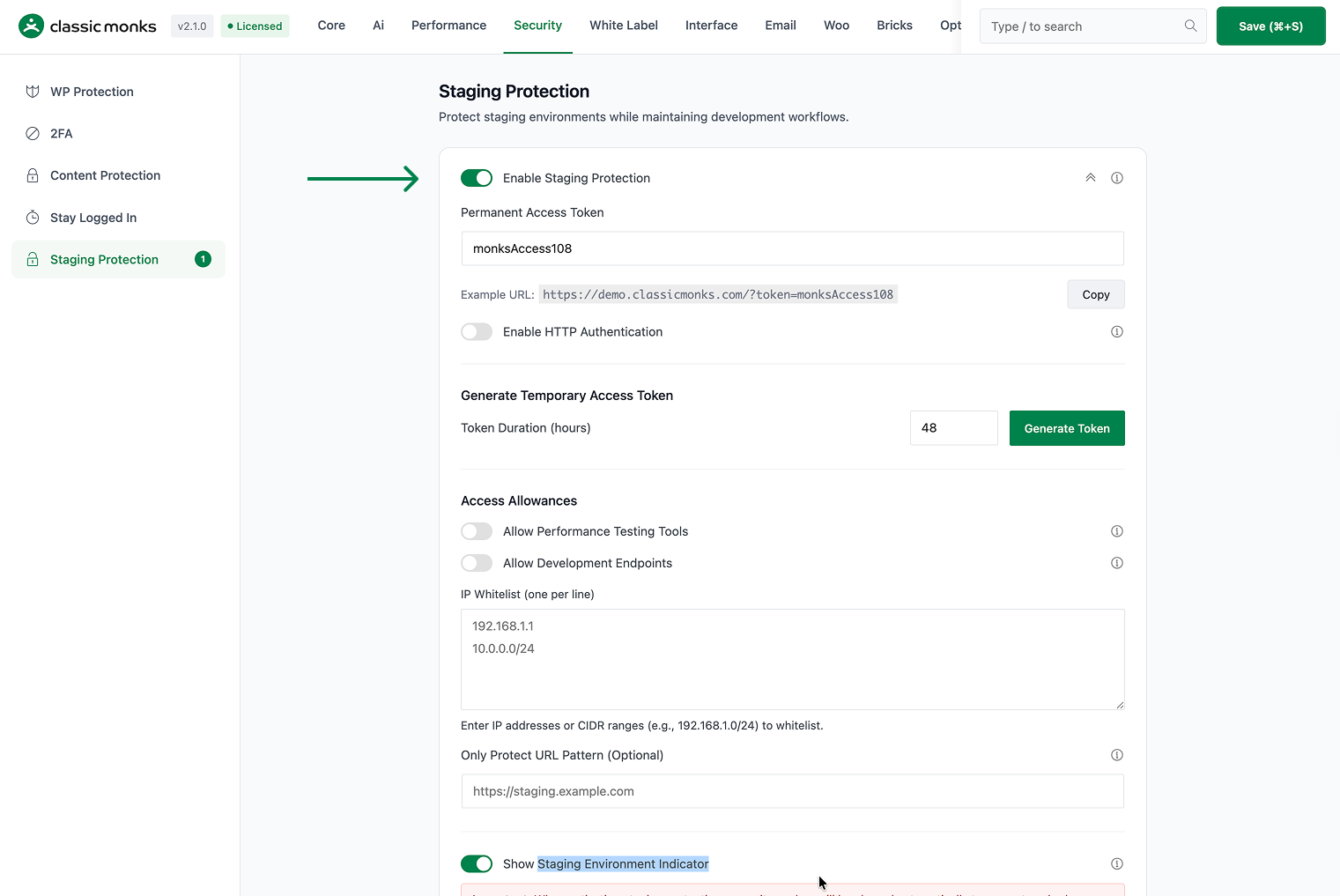
Step 4: (Optional) Configure Sub-Options
The related sub-options include:
- Enable HTTP Authentication: Browser-level password prompt
- Allow Performance Testing Tools: Whitelist GTmetrix, Pingdom, etc.
- Allow Development Endpoints: Allow WP_DEBUG, error log access
- Show Staging Environment Indicator: Visible banner in admin
Step 5: Save Changes
Click Save Changes.
Step 6: Test
Visit the site in a new browser. You should be prompted for HTTP authentication (if enabled). Check the source for the staging indicator and robots.txt for noindex directives.
Configuration Options
| Option | Description | Default |
|---|---|---|
| Enable Staging Protection | Master toggle. | Off |
| Enable HTTP Authentication | Browser-level password prompt. | Off |
| Allow Performance Testing Tools | Whitelist for performance tools. | Off |
| Allow Development Endpoints | Allow dev endpoints (WP_DEBUG, etc.). | Off |
| Show Staging Environment Indicator | Visible banner in admin. | On |
What Gets Affected
- The frontend: HTTP authentication prompt (if enabled)
- The admin: staging indicator banner (if enabled)
- The search engines: blocked from indexing (via robots.txt + meta tags)
- The development endpoints: blocked (if Allow Dev Endpoints is off)
- The performance tools: blocked (if Allow Performance Tools is off)
What Does NOT Get Affected
- The WordPress functionality: works the same after authentication
- The database: not affected
- The users: still work after authentication
- The plugins: still work after authentication
Advanced Options (Developers)
This feature registers 5 WordPress hooks in staging-protection.php:
Actions:
wpcallsCM_Staging_Protection::initialize_protection()(Initializes staging protection logic)admin_noticescallsCM_Staging_Protection::admin_notice()(Shows staging protection admin notice)wp_footercallsCM_Staging_Protection::add_staging_indicator()(Renders staging indicator on frontend)admin_bar_menucallsCM_Staging_Protection::add_admin_bar_menu()(Adds staging indicator to admin bar (priority 100))rest_api_initcallsCM_Staging_Protection::register_token_endpoint()(Registers REST API token endpoint)
// Hooked in staging-protection.php
add_action( 'wp', 'CM_Staging_Protection::initialize_protection' );
The feature modifies WordPress behavior by registering or removing hooks. Disabling it reverses those changes and WordPress returns to its default behavior.

Add your first comment to this post