




What Is the Enable Preloader Feature?
The Enable Preloader feature in Classic Monks adds a loading animation to your WordPress site. When a visitor navigates to a new page, the preloader shows while the page loads, then fades out when the page is ready.
This is a visual enhancement only. It does not affect the actual load time; it only changes how the load time is perceived.
Why You Need It
For sites where visual impression matters:
- Perceived performance: A preloader makes the site feel faster
- Brand consistency: The preloader can match your brand colors and style
- User engagement: Visitors are more patient when they see a loading animation
- Content protection: Prevents users from seeing partially loaded content
For most content-heavy sites, a preloader improves the user experience.
How to Use Enable Preloader in WordPress
Step 1: Navigate to Settings
Click into the Classic Monks plugin settings in your WordPress dashboard.
Step 2: Go to the Interface Tab
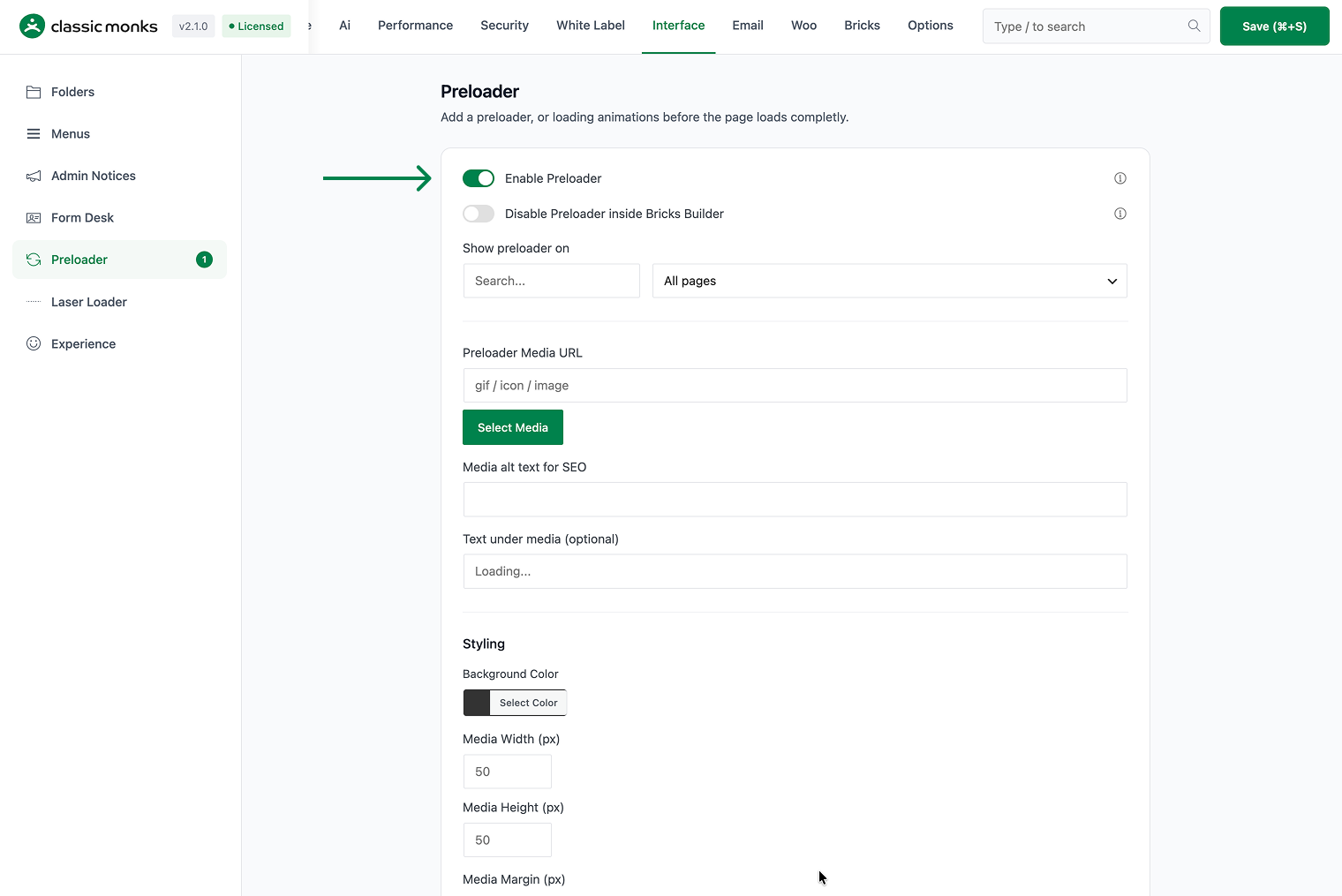
Click on the Interface menu, then click the Preloader subtab.
Step 3: Enable Preloader
Scroll to Enable Preloader and toggle on.
Step 4: Configure Mobile Settings (Optional)
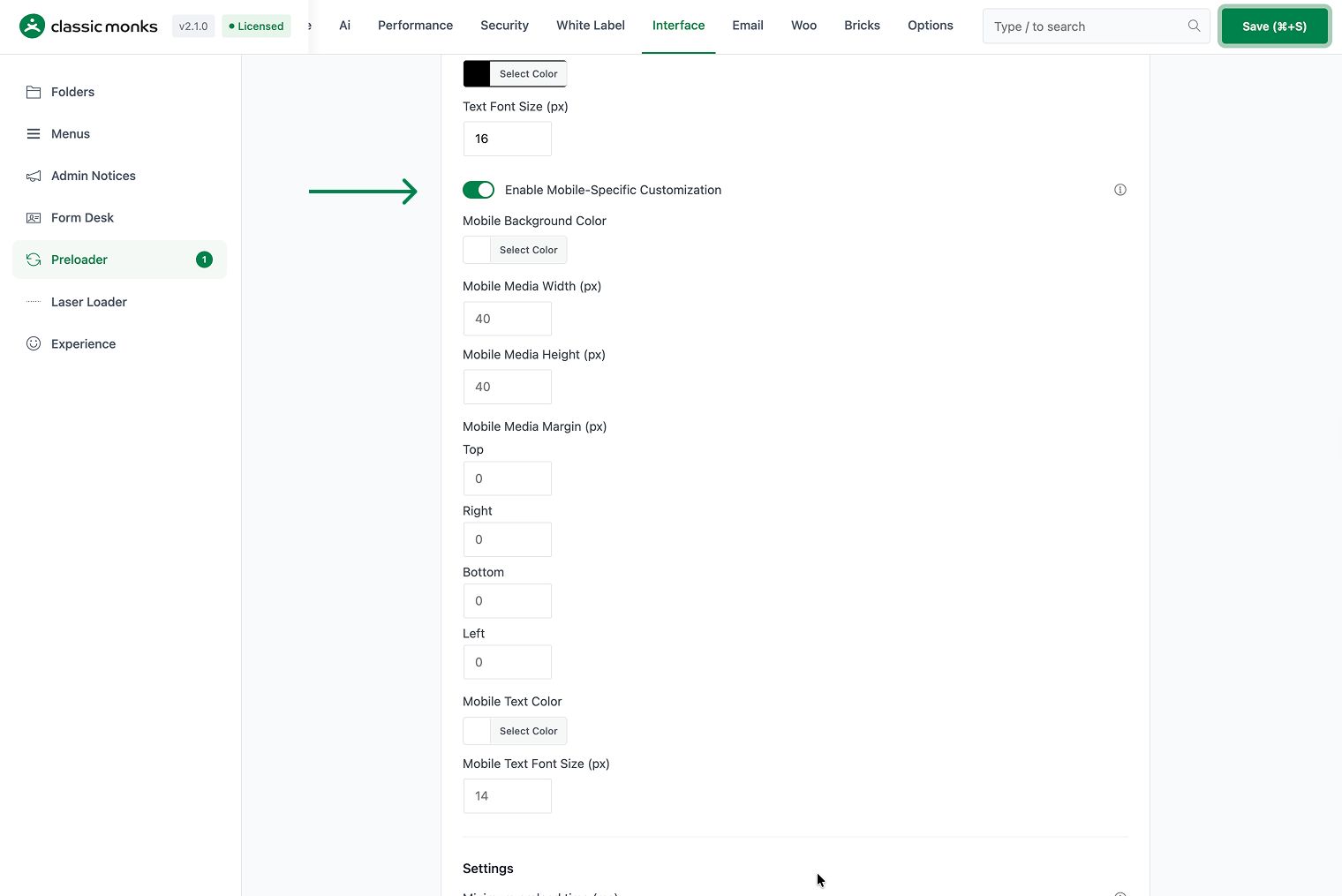
Toggle on Enable Mobile-Specific Customization to configure different preloader behavior for mobile devices. This is useful when:
- Your traffic is primarily mobile (60%+)
- Mobile connections are slower and a lighter preloader is preferred
- You want to test the mobile experience independently
Step 5: Configure Immediate Show (Optional)
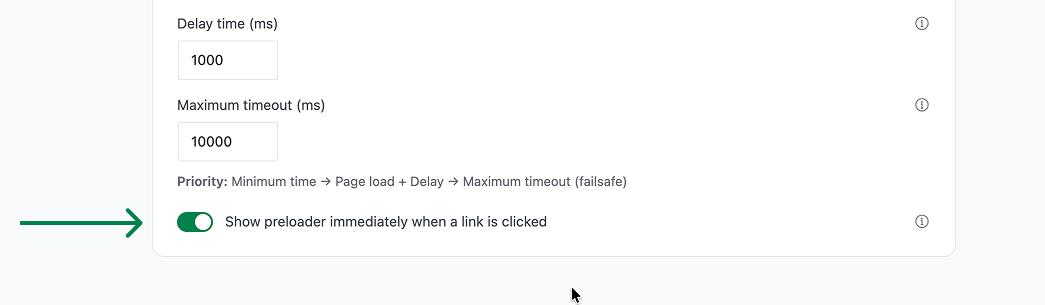
Toggle on Show preloader immediately when a link is clicked to display the preloader as soon as the visitor clicks a link, before the browser starts loading. This creates the perception of an instant page transition.
The timing difference:
- Default: Click, wait for browser, preloader shows, page loads
- Immediate: Click, preloader shows, page loads
The second approach feels faster because the visitor sees immediate feedback after clicking.
Step 6: Save Changes
Click Save Changes.
Step 7: Test
Visit your site on the frontend. The preloader should appear on page navigation.
Configuration Options
| Option | Description | Default |
|---|---|---|
| Enable Preloader | Master toggle. | Off |
| Enable Mobile-Specific Customization | Different preloader behavior for mobile devices. | Off |
| Show preloader immediately when a link is clicked | Shows preloader on click instead of on page load. | Off |
The preloader animation style, color, and speed are configured via CSS and filters (see Developer Notes).
What Gets Affected
- The frontend: preloader appears during page navigation
- The page load: the preloader shows while the page loads
- The user experience: smoother perceived performance
What Does NOT Get Affected
- The actual load time: unchanged (visual only)
- The page content: unchanged
- The search engine indexing: unchanged
- The accessibility: unchanged (screen readers ignore the preloader)
Common Use Cases
Portfolio and agency sites
A preloader gives the impression that the site is loading content, even if the actual load time is fast. For portfolio and agency sites where visual impact matters, a preloader sets the tone.
E-commerce sites
A preloader on the shop page creates anticipation and masks slow-loading product images. It can reduce bounce rates by giving visitors something to look at while the page loads.
Sites with heavy media
If your pages have many high-resolution images, a preloader masks the load time. Visitors are more patient when they see a loading animation than when they see a blank or partially loaded page.
Mobile-first sites
If your traffic is primarily mobile, mobile-specific preloader settings ensure the best experience for your most common visitors. Mobile connections are often slower, so a lighter preloader (or no preloader) on mobile reduces perceived load time.
High-traffic sites
For sites with millions of visitors per month, the immediate preloader reduces the “did the click work?” uncertainty, improving engagement.
App-like experiences
For WordPress sites that want to feel like native apps, the immediate preloader creates the instant response that users expect from apps.

Add your first comment to this post